What do you stand for?
Things get simpler when you're answer coheres with how you show up in the world - and it may have positive impact on the beings around you.

This simple but confronting question is Face #34 of our post-scarcity post-Maslow geodesic dome. Face #34 sits on the “Foundations” layer - the layer where we are supposed to get the basics of life sorted out.
If you are a startup founder you would recognise the question closely resembles the elevator pitch question: your answer should be crisp, impactful and the “what”1 of your mission. Its equally applicable to an individual2.

As a Worldview
What do you stand for? is the opportunity to honestly share your personal worldview.
Worldviews come in some common forms:
Bundled:
Buddhism wastes no time helping you answer the question, the very first limb of the Eightfold Path is Right View. I love that it is first because:
It sets the stage for all the other limbs, they all get simpler if you have this Right View thing down pat.
Like a jigsaw, Right View interlocks back to the Four Noble Truths. Right View is (at best) a deep understanding of:
Recognising the nature of suffering,
The source of the suffering,
Cessation of suffering and
The path leading to its end.
Christianity, is not so explicit but commonly: the bible is the word of God, the Trinity, that Christ died for our sins on the cross, having faith in God, the divinity of Jesus Christ, obeying ten commandments and salvation through grace.
Unbundled:
Whole swathes of society rejected the grand narratives of institutional religion (above) and in that we lost some very handy packaging and a supportive community. We are then compelled to re-bundle a home brew of self-help, pop wisdom, good law-abiding citizen and new age practices, perhaps involving psychologised meditation and candles.

Wrong-bundled 😅 (absorbed from culture):
In the Netflix series the character Mark Mossbacher is challenged by his daughter’s haughty woke friend, Paula, with “What do you stand for?” in this case it sounds more like an attack than a question.
Put on the spot, hapless Mark predictably implodes and has no answer. And realistically, most of us might have to answer “paying the rent/mortgage”3. The show’s cringeworthy charm is that you get to hate people who’s true answer is: “me” or “money”4.
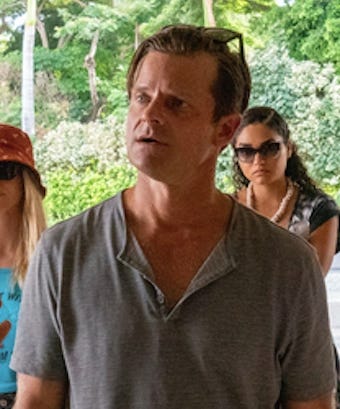
The lesson here is coherence, or a lack of it.
Mark is so busy trying to support his family and their collective expensive5 predilections, that he makes unethical choices that invite chaos. Everything stems from the defaults of what his culture (and chosen career6) hypnotises7 into him.
How different are we from being like Mark? Is it a case of “there but for the grace of god go-eth I”?
When you “stand for” something you are Vertical
Am I an “Upstanding Citizen”?, Do “I stand up for what’s right”, Do I “stand my ground”, “Take a stand”.
Its not just English, in other posts you may have seen me mention zhōng dīng (central equilibrium8), well, Confucianism has zhōng zhèng which is something like central and upright.
And… I may also be crooked, bent or spineless.
Idioms illustrate our deeply embodied cognitive apparatus. The point here is that your worldview also shows up in your posture and your actions in the world. People will want to interact with a “standup-guy/gal” - an internalised, coherent worldview might just help and be an upstanding example for others to follow9.
Why bother? Because Simplicity.
I was a long time coming to this, if you are like me, an ectomorph, a head-case, you may have a lot of un-bundled opinions and practices.
I thought I was coherent, but actually complex and muddled. No zhōng dīng.
Now, my worldview updates regularly at the edges, but has core stability. Occasionally a shock results in a core upgrade - both are helpful.
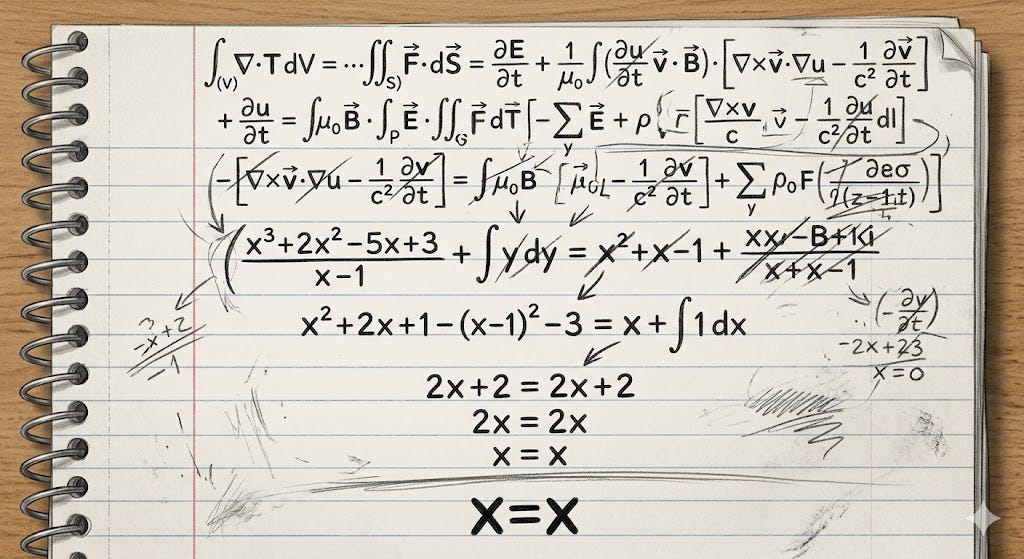
“What you stand for” helps with Curation
“Curiosity killed the cat”.
In a world of abundance, your worldview will protect you from the firehose by what your reject.
Each day simpler. Each day know what is garbage.
That is a topic for another post.
Coherence
I started to draft a “Core-herence suggestion” - a process for getting you into a dialog with yourself on your core worldview(s).
But…I don’t want to be a fake life coach. No recipe for you, dear reader, so here are some cues:
a) Maybe just be curious about it and look for the cultural hypnosis that poor Mark Mossbacher was victim to. What did you take on by default?
b) Maybe look at your emotional and instinctive reactions in the world. What role does (irrational) fear play in my day? Seeing fears is more true than any list of virtues that you might conjure about yourself10.
c) Perhaps, when things go wrong, how do you explain it to yourself. Blame yourself? Blame others? Would a reasonable person agree?
Related: I think this is hilarious. Whenever our taichi teacher, stops the class and says “What I’m not seeing is x-y-z [[short demonstration]],
I see you doing p-q-r [[more painful demonstration]]”
All us students discussed later that we ALL thought the teacher was critiquing them! 😂.
Our teacher learned the hard way11 that westerners are proud and brittle and really have to work at “beginners mind”. Now she tries not to hold eye-contact with one person when making a corrections.
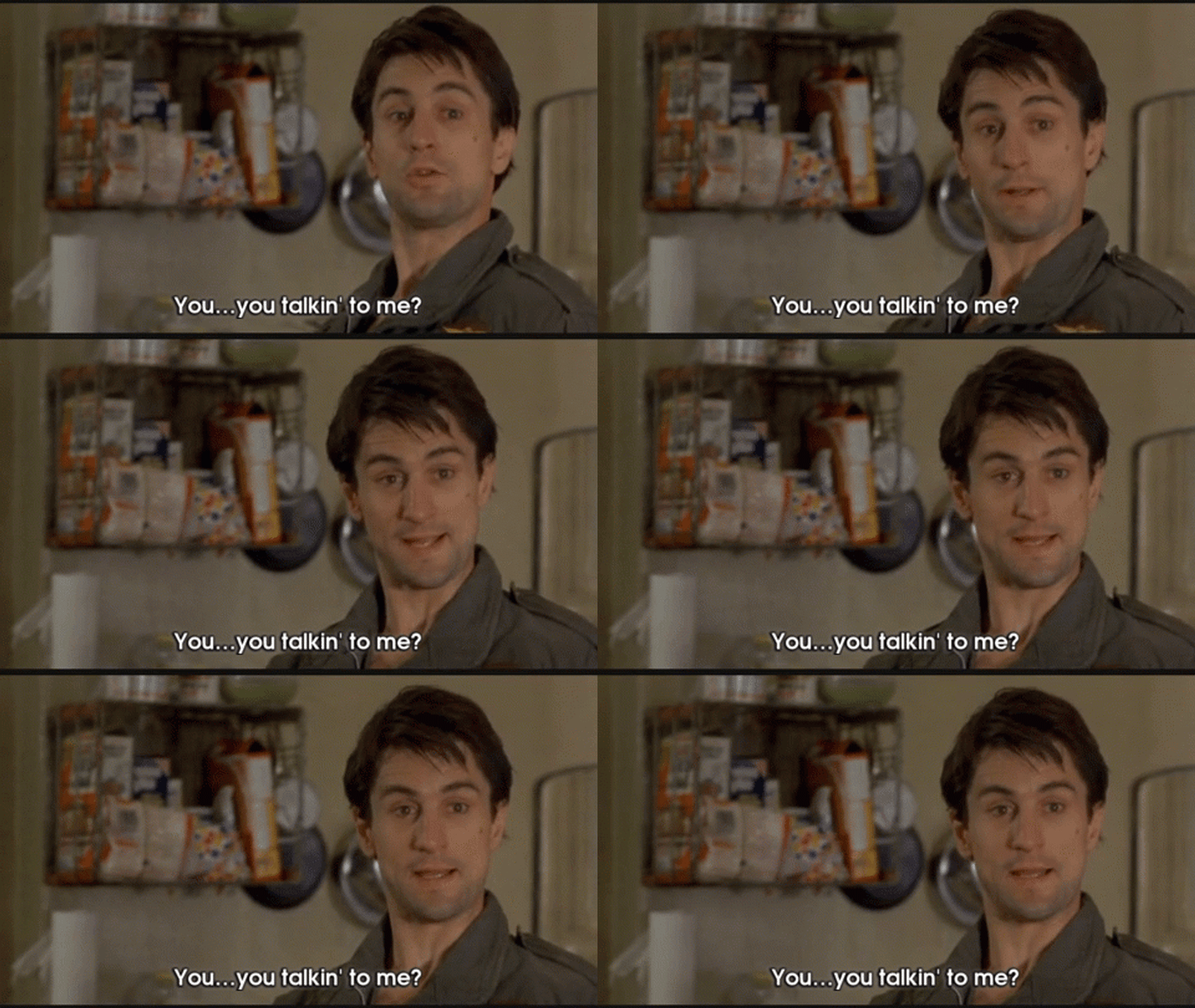
How do you handle constructive criticism?
d) Do you have a mindset to improve or embody any of the more noble ideas about yourself.
Caveat: A selfish worldview will be harmful for those around you. Sociopaths also have a coherent worldview12.
Don’t be like me or most technical founders and start yammering on about the “how”. Never ever. The goal of the elevator pitch is to capture the attention so you can answer the “how” question later.
Once you answer, the listener can (for better or worse) classify you, they will also be looking for proofs that back it up. You may have much in common or decide to move on - it might just save a lot of pain later. Its the front page of your “operating-manual”.
A common noble, easy, response may be “protect and bring up my children as good people”. The “how” question might then be worth exploring. Religion too is very helpful. If I am a religious person then answers are available pre-templated, saving cognitive effort.
Intended for us to judge as toxic.
Because culture manipulates us into being upwardly mobile. At least performatively.
Buddhism also has “Right Livelihood”. Once about non-harmful work, in the original culture butcher or assassin. In modern culture, the menu would be much broader,
We are asleep. (from my worldview)
But its not really about physical equilibrium.
“Know them by there deeds”. You don’t have to confess your worldview, if asked you may want to say “nunya bizness”. But how you show up will express enough.
Virtuous labels are more likely to be aspirational.
The range of responses, can be from slipperiness (me), to disagreeing (me), arguing (me) through to walking out (not me…..yet ⏳).
refs:
https://www.clearerthinking.org/post/what-you-need-to-know-about-sociopaths
https://ribbonfarm.com/2009/11/21/morality-compassion-and-the-sociopath